Recruitment & AI: the complete 2026 guide for recruiters - how artificial intelligence is transforming recruitment practices (CVs, interviews and AI in recruitment)
2026: the way you recruit is already obsolete
While you sort through hundreds of CVs by hand, your competitors are using AI to identify the right candidate in a few minutes.
To train your HR teams, discover our role-based AI workshops.
Today, a high-performing recruiter no longer just posts a job ad and waits. They run a smart process, automated where it matters, and they spot the candidates who genuinely master AI – not the ones who simply mention it on their CV.
The problem? Most HR teams are still stuck in 2023.
You miss key signals in applications. You lose hours on tasks an AI would do in 30 seconds. And worse: you let the best profiles slip away because you do not know how to assess their AI skills.
This guide will bring you up to speed. Now.
You will discover:
- How to automate pre-screening without losing the human touch (and cut your processing time by 10)
- The interview questions that reveal whether a candidate really uses AI or is bluffing
- The AI tools that transform your sourcing, your CV analysis and your decision-making
Two goals, one urgency:
- Recruit faster and better by building AI into your process from next week
- Spot the genuinely AI-ready profiles – the ones who will make the difference in your teams
If you finish reading this without changing at least one of your recruitment practices, you have already lost a six-month head start on the market.
AI & recruitment: why artificial intelligence is transforming the recruitment process in 2026
Artificial intelligence has become a strategic lever for recruitment, particularly in HR functions. It affects everything: sourcing, CV screening, qualification, communication with candidates, and sometimes even how applications are prioritised.
This shift is explained by three factors:
- Volume: applications are soaring and recruiters need to base their selection on a system.
- Speed: jobs are changing, and open positions require new skills.
- Precision: AI-based tools make it possible to extract information, rank applications and act on each stage of recruitment.
This is what we call augmented recruitment: AI does not replace the recruiter, but it lets them make better use of their time, reduce administrative tasks and focus on the strategic parts of recruitment.

AI in recruitment: what algorithms actually do (and what recruiters need to oversee)
Algorithms play a central role in AI tools applied to recruitment. AI algorithms can analyse candidate data, compare a CV with a job offer, spot expressions or score an application against set criteria.
In practice, AI can:
- screen CVs and rank applications in order,
- analyse data, based on the data available,
- identify gaps or inconsistencies,
- suggest interview questions.
But there is a major risk: bias. Unconscious bias can be amplified if the training data is flawed. Recruiters can save time, but they must make sure the criteria used are transparent, fair and compliant.
Key takeaway: AI should be a support, not an automatic decision. Algorithms need oversight, recruitment practices need auditing, and stakeholders need to take responsibility.
Improving recruitment practices with AI: the uses that change HR performance
Discover how AI can deliver immediate gains.
1) Sourcing and LinkedIn: find the best profiles faster
AI helps recruiters optimise their LinkedIn searches, identify similar profiles and structure a recruitment strategy. In 2026, sourcing is not limited to a keyword: you can base your search on finer signals, such as AI skills, the ability to automate, or the candidate's own recruitment experience (clarity, structure, communication).
2) CV screening: extract the information without losing the nuance
CV screening becomes faster, especially when there are many applications. Tools can extract the key information from a CV: dates, qualifications, experience, skills, projects.
But be careful: an "ATS-optimised" CV is no guarantee of reality. Hence the importance of tests and interviews.
3) Recruitment chatbots and communication with candidates
AI-powered chatbots can answer questions, engage candidates and automate follow-up.
This improves the candidate experience while automating basic exchanges.
Recruiting "AI-ready" talent: the profiles to target for your needs
In 2026, recruiting talent with AI skills does not mean recruiting only engineers. There are several profiles, and recruiters should base their selection on how AI is actually used in the role.
Here are the most sought-after profiles:
AI HR / augmented Talent Acquisition
AI Product / Ops
AI Marketing
AI Sales
Data / Analyst
Most importantly: recruit someone who can assess AI skills in their own context, not just someone who "has used a tool".
CVs: how to detect real AI skills (and avoid the "bullshit" CV)
Many CVs mention "AI" everywhere. Recruiters therefore need to screen CVs methodically.
What to look for in a CV:
- detailed use cases,
- measurable results (shorter lead times, automated tasks),
- concrete examples of workflows,
- projects where the candidate worked from data.
What should raise a red flag:
- "AI" with no example,
- buzzwords with no evidence,
- no mention of limitations or bias.
Interviews: the essential questions to assess a candidate's AI skills
Interviews are where you validate reality.
Here is a simple structure for ranking applications.
Block 1 — Understanding AI
- Explain, in your own words, how artificial intelligence works in the way you use it.
- What limitations have you already come across?
- How do you check an AI response?
Block 2 — Practical scenario
- Give an example where you automated a repetitive task using AI.
- What did you optimise? What were the gains?
Risks / ethics / bias
- How do you handle sensitive data?
- Have you ever identified a bias problem?
Tests: 3 simple (and very effective) AI exercises to use in recruitment

To avoid relying on talk alone, use tests.
Test 1 — Structured prompt (10 minutes)
Goal: check the ability to frame a problem and structure an instruction.
Criteria: precision, context, constraints, output format.
Test 2 — CV analysis (10 minutes)
Ask the candidate to use AI to extract the information from a CV, then to check its consistency.
What you observe: the ability to sort, prioritise and avoid blind trust.
Test 3 — Role-based case (15 minutes)
Marketing: content plan and KPIs
Sales: personalised email + objections
HR: skills matrix + job ad
Finance: summary + consistency check
The goal: assess skills objectively and identify the best candidates.
HR software, ATS and AI: how to choose a tool without degrading the recruitment experience
In a modern recruitment process, software is critical. It must:
- help the recruiter optimise,
- make it possible to rank applications,
- make communication with candidates easier,
- reduce administrative tasks.
But it must also preserve quality: avoid screening CVs unfairly, detect bias and remain transparent.
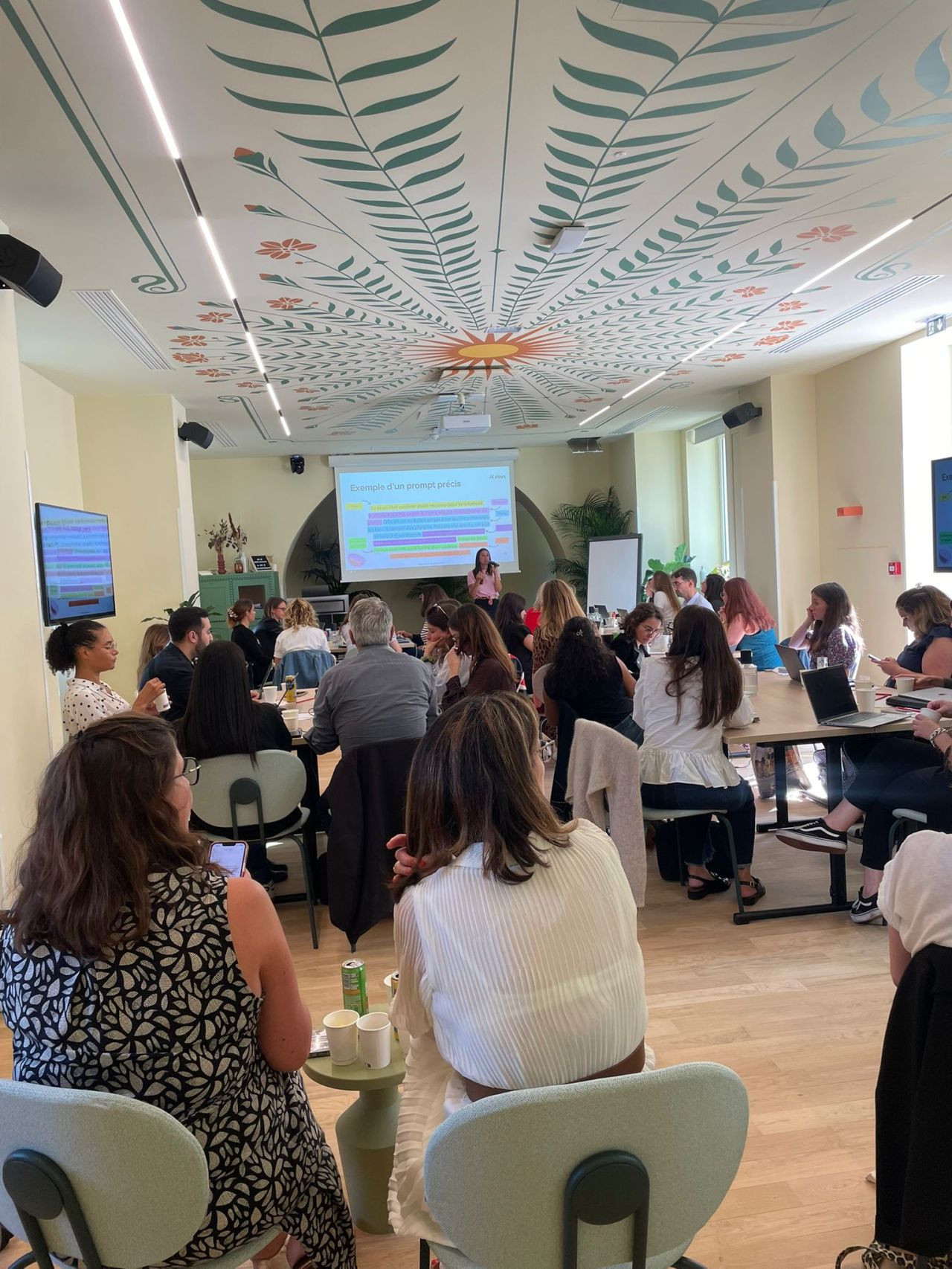
Companies can improve performance if they choose a tool that matches their objectives and if they train HR teams to use AI properly.
Recruitment practices: how to integrate AI without falling into bias (HR framework 2026)
Recruitment practices need to evolve rigorously.
Here is a simple method:
- Define human criteria (key skills, qualifications).
- Use AI to analyse data, but never to decide on its own.
- Standardise interviews: same questions, same scoring grid.
- Audit and act on unconscious bias.
Conclusion: recruitment and artificial intelligence — succeeding in 2026
In 2026, recruitment is evolving: artificial intelligence makes it possible to optimise the recruitment process, automate tasks and help recruiters make better decisions. But to recruit the best profiles, you also need to know how to assess AI skills, structure interviews and use reliable tests.
Companies can move faster by adopting a field-based approach, built on role-based use cases, and by training HR teams to use AI properly in recruitment.
Where does your company stand with AI? Take the free AI diagnostic in 5 minutes and get your action priorities.